From Waste to Resilience: The Osa Circular Farms Project
By Regenerative EarthAbout This Project
Introduction to the Metaproblem
Rural territories across the Global South face a systemic metaproblem where economic inequality, climate vulnerability, and extractive food systems reinforce one another.
Globally:
- Smallholder farmers produce 30–35% of the world’s food while managing less than 25% of agricultural land (FAO).
- Agriculture accounts for approximately 70% of global freshwater withdrawals (FAO).
- Climate change is projected to reduce agricultural productivity in tropical regions by up to 30% by 2050 (IPCC AR6).
Conventional agricultural models rely on linear resource use — extract → use → discard — resulting in:
- Rising production costs
- Soil and water degradation
- Increased vulnerability to climate shocks
- Rural-to-urban migration
Circular economy–based rural development offers a systemic alternative by integrating food security, climate adaptation, and livelihoods into one regenerative model.
Core Problem in the Bioregion
The Osa Peninsula, one of the most biodiverse regions on Earth, faces persistent rural development challenges.
Socioeconomic Challenges
- Low Human Development Index (HDI) in rural districts (INEC, Costa Rica)
- Limited access to productive capital
- High dependency on climate-sensitive agriculture
- Weak generational renewal in farming families
Environmental and Climate Challenges
- Increasing water scarcity during critical crop periods
- Greater rainfall variability linked to climate change
- Rising energy and agricultural input costs
- Pollution risks from untreated animal waste
Systemic Gap
Historically, rural development initiatives have:
- Addressed isolated technical issues
- Failed to integrate social, economic, and environmental dimensions
- Lacked long-term technical follow-up
This has limited resilience, scalability, and sustained impact.
Proposed Solution
The project implements circular economy technologies tailored to real farm-level needs, supported by continuous technical advisory.
Core strategy:
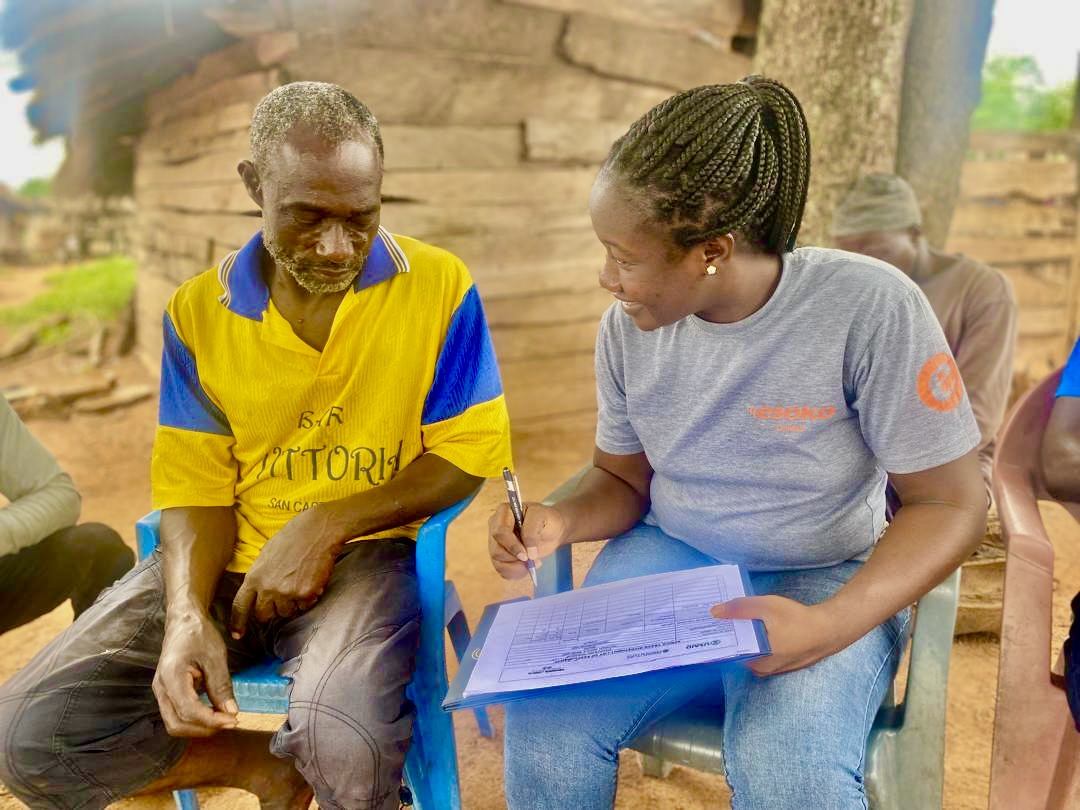
- Farm-level socio-productive diagnostics (completed in 2025)
- Grouping families by priority intervention needs
- Deployment of low-cost, high-impact technologies
- One-year post-installation technical monitoring
Implementation period:
- February 2026 – December 2026
- Follow-up and monitoring: 12 months post-installation
Projects Currently Supported Include
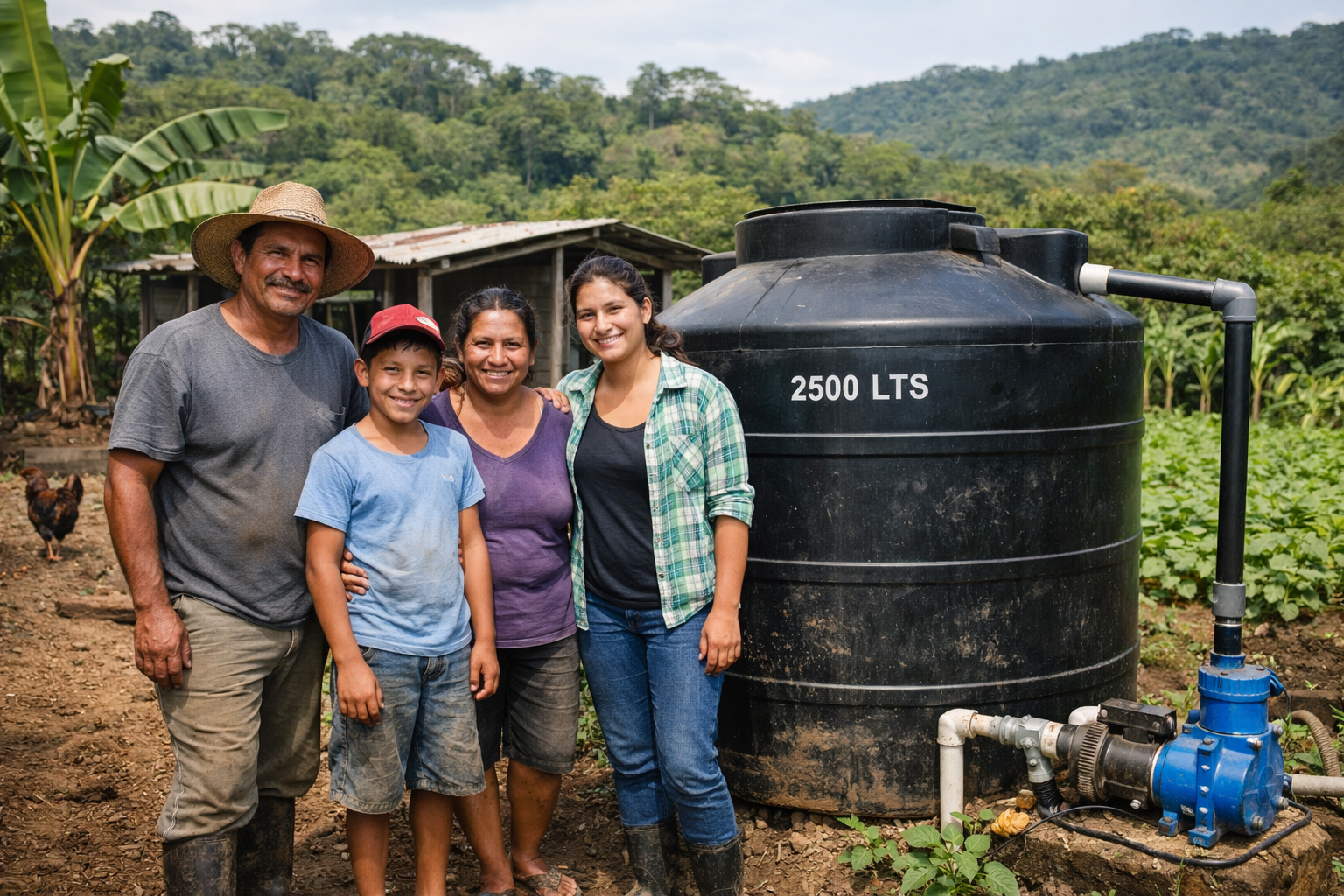
1. Efficient Water Management Systems
9 farming families
Technologies:
- Rainwater harvesting systems
- Electric pumping systems (0.5 HP)
- 2,500-liter water storage tanks per family
Impact:
- Secures water access for food production
- Reduces climate vulnerability
- Lowers long-term production costs
- Enables year-round cultivation
Budget:
- $5,058 USD total
- Approximately $562 USD per family (equipment only)
2. Biodigester for Biogas and Biofertilizer
1 farming family
Technology:
- 15 m³ biodigester
- 5 m³ biogas storage capacity
- Converts animal waste into renewable energy and organic fertilizer
Impact:
- Reduces methane emissions
- Improves water quality
- Eliminates odors and contamination
- Replaces chemical fertilizers
Budget:
- $1,000 USD
Total Direct Investment
- 10 families supported
- $6,058 USD in equipment financing
- $27,027 USD total project value, including:
- Family labor and land contributions
- Technical advisory services (approximately 5,200,000 CRC)
What Makes It Unique
-
True circular economy logic
Waste → energy → fertilizer → food
Rainwater → storage → production → resilience -
Strong institutional support
More than 20 hours of professional agronomic advisory per family -
Co-investment model
- Project funds: materials and equipment
- Families: labor and land
- Public extension services: technical expertise
-
Low bureaucracy, high speed
Classified as micro-projects with no additional permitting requirements -
Scalable and replicable
Designed for expansion across the Osa Peninsula and other bioregions
Why People Should Donate
By funding this project, you are:
- Supporting 10 rural farming families with tangible infrastructure
- Increasing food security and climate resilience
- Reducing water stress in a global biodiversity hotspot
- Preventing pollution through waste-to-resource systems
- Lowering production costs while improving livelihoods
- Strengthening local capacity rather than dependency
Each dollar generates multiple returns:
- Financial
- Ecological
- Social
- Cultural
Call to Action
Fund circular solutions that last.
Transform water scarcity into resilience.
Turn agricultural waste into energy and fertility.
Support the scaling of circular economy technologies that empower rural families, protect biodiversity, and regenerate livelihoods in Costa Rica’s Osa Peninsula.
Join us in financing regeneration — one farm at a time.
Project Impacts
No Sustainable Development Goals linked yet.
Socio-Productive Diagnostics Completed
Regenerative Earth
Our mission is to preserve biological diversity and indigenous wisdom in keystone ecosystems globally, as well as to enable the conditions where humans and the environment thrive together in balance and reciprocity.
Support This Project
.jpg?alt=media&token=81e7a811-b9f8-4b18-a135-260403af049a)